
Data Centre Growth in the UK and US: Where is the AI Boom Being Driven?

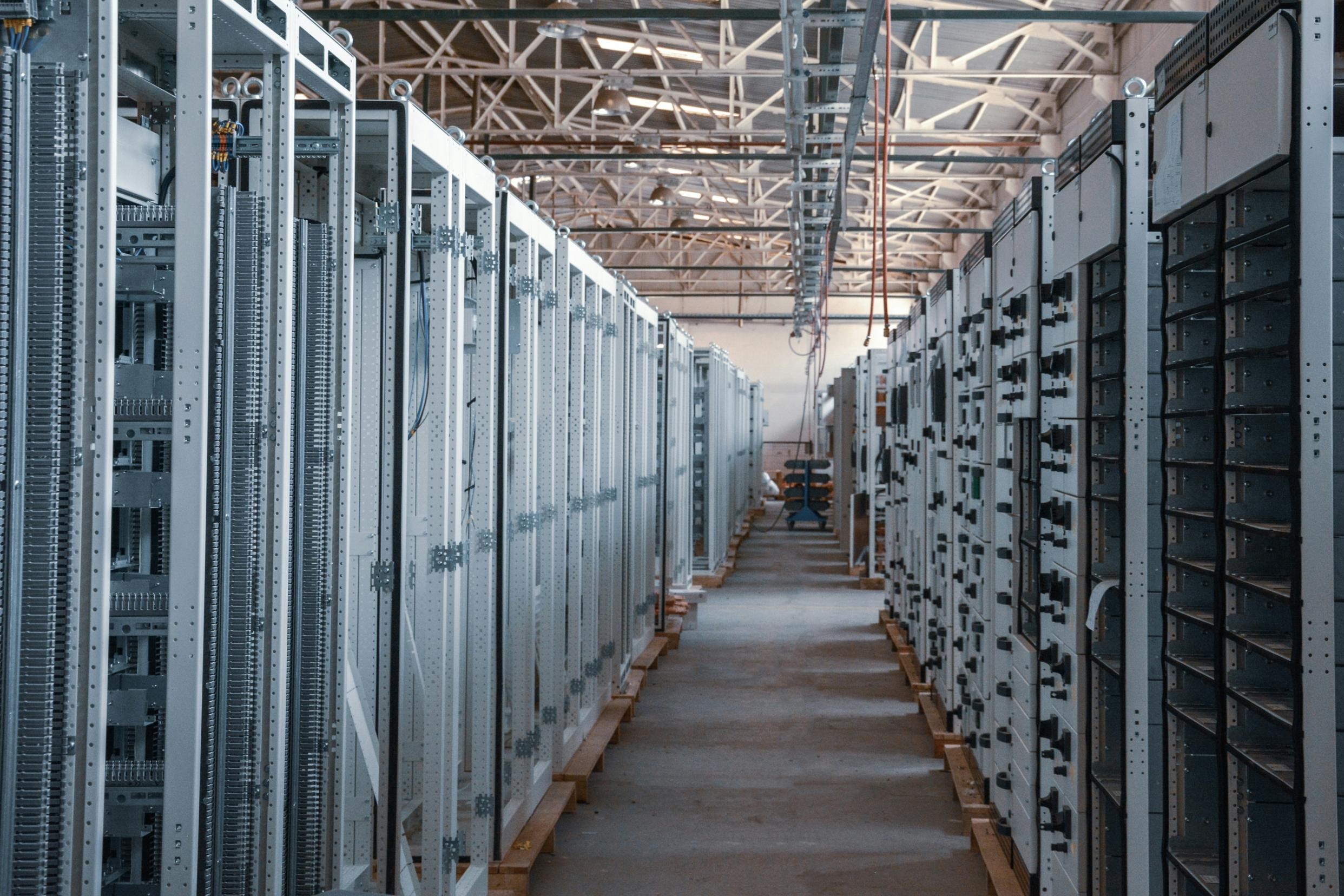
Data centre growth has become one of the defining technology, engineering and energy stories of the decade. As artificial intelligence (AI) adoption accelerates globally, the physical infrastructure that powers it, from hyperscale data centres to advanced cooling systems and electrical networks, is under growing scrutiny.,
For technology and engineering businesses, this shift presents significant opportunities. The AI boom is driving increasing demand for advanced digital infrastructure on both sides of the Atlantic, with the US leading at scale, Texas emerging as one of the most active growth markets, and the UK strengthening its position as one of Europe’s most important data centre hubs.
What is driving data centre growth in the UK and US?
At its core, AI requires a huge amount of computing power. Every AI model that is trained, tested, deployed and used by businesses or consumers relies on physical data centre infrastructure.
As AI adoption expands into everyday business use, demand is shifting too. Companies now need compute capacity for:
- AI training and inference
- Cloud computing platforms
- Automation and analytics
- Data-intensive enterprise applications
This surge in demand is putting pressure on existing data centre capacity and encouraging new investment in AI-optimised infrastructure.
According to Euronews’ analysis of global data centre distribution, the US remains the clear global leader, with more data centres than any other country by a significant margin. Germany and the UK also sit near the top of the global rankings, underlining how important both markets are to Europe’s digital infrastructure.
This isn’t only about the number of facilities. A smaller number of very large AI data centres can have far greater impact than a larger number of smaller legacy facilities. This is where the UK and US markets become especially interesting.
Why is Texas becoming a major AI data centre growth market?
The United States remains the global leader in data centre capacity, with significantly more facilities than any other country, and Texas is quickly becoming one of its most dynamic growth regions. While Northern Virginia remains a long-established data centre powerhouse, particularly around Data Center Alley, Texas has become a major focus for new AI infrastructure because of its land availability and growing engineering talent base. However, the UK and Germany are among Europe’s most strategic digital infrastructure hubs, supporting enterprise, financial services, and AI-driven innovation.
There are around 140 planned data centre projects in Texas, a figure that’s set to rise as the boom gathers steam. This points to a fast-moving infrastructure build-out that could reshape engineering recruitment and long-term technology investment across the state.
There’s also more than 150GW of new data centre power capacity filed nationally, with Texas ranking among the most significant states for planned capacity. This level of demand explains why companies are looking closely at how data centre expansion can be powered reliably and sustainably.
Texas is attractive because it brings together several factors that data centre operators care about. It has large areas of developable land, and access to engineering talent across Austin, Dallas-Fort Worth, Houston and other regional markets. For AI data centres, where power density and scalability are critical, those advantages are significant.
What does Texas data centre growth mean for engineering recruitment?
The growth of Texas AI data centres is not only an infrastructure story, but it's a critical engineering talent story. Building and operating AI infrastructure requires a wide mix of specialist skills, including:
- Electrical and power systems engineering
- Mechanical and cooling systems experts,
- embedded software development
- Cloud and infrastructure engineering
- Data centre operations leadership
For employers, the challenge is that many of these skills are already in demand across other high-growth sectors. This is creating a highly competitive, skill-constrained talent market, where specialist knowledge, speed and expertise in hiring are critical advantages.
Our own insight into Texas engineering salary trends reflects this pressure. Software, electronics, embedded systems, AI, cloud infrastructure and senior engineering talent are all areas where demand remains strong. As data centre investment continues, these skills will become even more important to companies building and supporting digital infrastructure in Texas.
This is also where flexible hiring models come into play. Some businesses will need permanent engineering teams to support long-term data centre growth. For fast-moving infrastructure programmes, the ability to access proven expertise quickly can be a major advantage.
Why is the UK a leading data centre market in Europe?
The UK is one of Europe’s most advanced data centre markets, with London and the surrounding region forming one of the continent’s strongest global hubs for cloud, finance and digital infrastructure. The UK benefits from strong connectivity, deep cloud adoption, a mature financial and technology sector, and a skilled workforce.
Government policy is also helping to raise the profile of the sector. Data centres were designated as Critical National Infrastructure in the UK, recognising their importance to the UK's AI capability and economic resilience. The UK Compute Roadmap also sets out plans to support AI Growth Zones, public compute capacity and the infrastructure needed for AI training and inference workloads.
For the UK, data centre growth is closely tied to competitiveness. Businesses want access to reliable, secure and local compute capacity. Public sector organisations need resilient infrastructure. AI companies need scalable environments to train and deploy models. Large enterprises need data sovereignty, low latency and dependable cloud performance.
This is why the UK’s data centre market is not standing still. London remains the dominant cluster, but there is growing interest in locations beyond the traditional South East corridor. However, power constraints and land availability in London are accelerating investment in regional data centre clusters across the UK.
Where do Germany and the UK sit in Europe’s AI data centre boom?
Germany and the UK are leading Europe’s AI-driven data centre expansion, supported by strong connectivity, enterprise demand, and established ecosystems
- Germany, anchored by Frankfurt, benefits from strong connectivity and a central role in European finance and data exchange.
- The UK, led by London, remains a global hub for cloud and digital infrastructure..
Both markets benefit from enterprise demand, connectivity, technical capability and established operator ecosystems.
Data centres are power-intensive facilities, and the AI boom is forcing operators, governments and suppliers to think carefully about how capacity is delivered. That includes renewable energy procurement and the design of facilities capable of supporting high-density AI hardware.
For engineering and technology professionals, this creates a broad range of opportunities. The sector needs people who understand things like power electronics, electrical systems, mechanical design, compliance and operational resilience. It also needs commercial and leadership talent capable of guiding long-term growth in a highly competitive market.
What technical skills are needed for AI data centre growth?
AI data centre growth is built on specialist engineering and technology talent. These facilities are complex environments where efficiency and safety are critical. A small design weakness or operational failure can have major consequences, so employers need people who understand both the detail and the bigger infrastructure picture.
Key technical skill areas include:
Electrical & Power Systems
- Power distribution
- Backup generation
- Battery systems
- Switchgear
Mechanical & Cooling:
- Liquid cooling technologies cooling
- Thermal management systems
- Building management systems (BMS)
Software & Infrastructure
- Cybersecurity
- Embedded software
- Network engineering
- Cloud infrastructure
The growing complexity of AI workloads is increasing demand for multi-disciplinary engineers who can integrate hardware, software, and energy systems.
At Redline, our consultants change lives everyday, bulding world class teams for technology companies. Their sector knowledge and specialisms across engineering and technical recruitment, software jobs, electronics recruitment and more are crucial when building the teams who will fuel the rise of data centres.
How will data centre growth shape the future of technology recruitment?
Data centre growth in the UK and US is creating a recruitment market where specialist knowledge will matter more than ever. The companies that succeed will be those that understand their technical requirements early, benchmark salaries properly, move quickly when they find the right people and build flexible workforce strategies around project timelines.
For candidates, the sector offers exciting long-term potential. AI data centres are at the heart of some of the biggest trends in technology, from artificial intelligence and cloud computing, to energy resilience and sustainable infrastructure. It’s an exciting space for engineers who want to work on systems that genuinely shape the future.
For employers, the competition for talent will be intense. That makes talent mapping, market insight and specialist recruitment support increasingly valuable.
Redline has more than 40 years of experience supporting engineering, electronics and technology businesses. As data centre investment accelerates across the UK, Europe and Texas, our role is to help organisations build world-class teams and help skilled professionals find opportunities in one of the most important infrastructure markets of the AI era.
Supporting data centre recruitment in the UK, Europe and Texas
Data centre growth is being driven by AI, but it will be delivered by people. Behind every new facility and resilient network is a team of engineers, technical specialists, project leaders and commercial experts making it work.
At Redline, we understand the pace and complexity of technology recruitment. Whether you’re hiring for data centre engineering, electronics, software, or leadership roles, our knowledge-led approach helps businesses find the specialist talent they need to move forward with confidence.
If you’re planning growth in the data centre sector or exploring your next technical career move, explore our latest jobs today or explore our client offering.
