
AI Isn't Replacing Engineers: How Engineering Roles Are Evolving

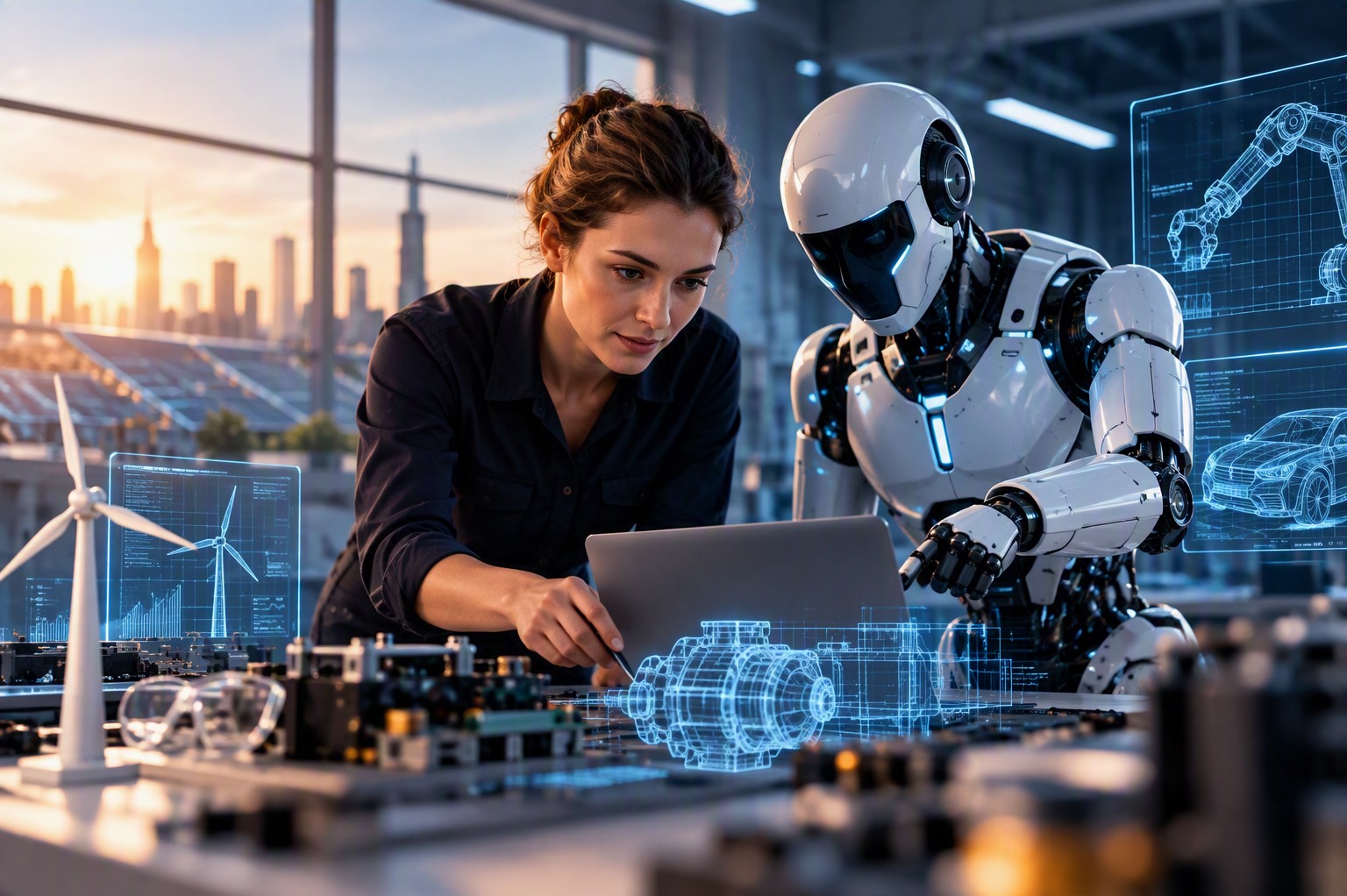
AI Isn't Replacing Engineers: How Engineering Roles Are Evolving
Artificial Intelligence (AI) continues to dominate headlines. From software development and manufacturing to design and data analysis, AI technologies are rapidly changing how businesses operate. As organisations invest heavily in automation and machine learning capabilities, a common question continues to emerge:
Will AI replace engineers?
The short answer is no.
The reality is far more nuanced. Rather than replacing engineers, AI is transforming engineering roles, changing the skills employers value and creating new opportunities for professionals willing to adapt.
For both employers and candidates, understanding this shift will be critical for future success.
The Fear of Replacement Versus the Reality of Evolution
Throughout history, technological advancement has often been accompanied by concerns about job displacement. Similar fears emerged during the rise of computer-aided design (CAD), industrial automation and cloud computing.
Yet in many cases, technology did not eliminate roles. Instead, it altered how work was performed.
AI is proving no different.
While AI can automate repetitive tasks, analyse large volumes of data and accelerate certain processes, it still relies heavily on human expertise, oversight and commercial judgement.
Engineering remains fundamentally rooted in problem-solving, innovation, creativity and decision-making, areas where human capability continues to play a vital role.
The engineers who thrive in the coming years are unlikely to be those competing with AI. They will be the professionals who understand how to work alongside it.
How AI Is Changing Engineering Roles
Across industries including electronics, software, aerospace, automotive and advanced manufacturing, AI is already becoming part of everyday engineering workflows.
Software Engineering
AI-powered coding tools can help developers generate code snippets, identify bugs and accelerate testing processes.
This allows software engineers to spend less time on repetitive development tasks and more time focusing on architecture, system optimisation, cybersecurity and innovation.
The result is not fewer engineers, but engineers working at a higher level.
As demand for software professionals continues to evolve, organisations are increasingly seeking candidates who can combine traditional development expertise with AI awareness.
Electronics and Semiconductor Design
Within electronics and semiconductor development, AI is helping engineers analyse complex datasets, optimise circuit designs and improve simulation processes.
As semiconductor devices become increasingly sophisticated, businesses require skilled engineers who can interpret AI-generated outputs and make informed technical decisions.
Manufacturing and Automation
Smart factories are increasingly using AI for predictive maintenance, quality control and production optimisation.
However, these systems still require engineers to develop, manage, validate and continuously improve the technology.
AI can identify a potential issue within a production environment, but it is often engineers who determine the most effective course of action.
The Skills Employers Are Prioritising
According to techUK, AI adoption across UK organisations continues to accelerate as businesses look to improve productivity, efficiency and innovation. As AI becomes increasingly embedded within engineering and technology environments, hiring managers are placing greater emphasis on a combination of technical expertise and distinctly human capabilities.
Employers are increasingly seeking professionals who can combine advanced technical knowledge with critical thinking, problem-solving and commercial awareness. In particular, organisations are looking for individuals who demonstrate:
- Critical thinking
- Systems engineering knowledge
- Complex problem-solving abilities
- Data literacy
- AI awareness and practical application skills
- Communication and stakeholder management
- Innovation and creativity
- Commercial understanding
Interestingly, some of the most sought-after skills are those that AI cannot easily replicate, including leadership, judgement, creativity and the ability to navigate complex technical and business challenges.
Many organisations are already facing a growing skills shortage as demand for advanced engineering and AI capabilities continues to increase.
The ability to lead teams, evaluate risk, challenge assumptions and make strategic decisions continues to be highly valued across engineering and technology organisations.
New Engineering Opportunities Are Emerging
One of the most overlooked aspects of AI adoption is the number of new opportunities being created.
As organisations build AI capabilities, demand is increasing for professionals in areas such as:
- AI Systems Engineering
- Machine Learning Operations (MLOps)
- Embedded AI Development
- Robotics Engineering
- Edge Computing
- Data Infrastructure Engineering
- AI Governance and Compliance
- Cybersecurity for AI Systems
Many of these positions barely existed a decade ago.
For candidates considering their long-term career prospects, this presents an opportunity rather than a threat.
Professionals who embrace emerging technologies often place themselves at the forefront of future hiring demand.
What This Means for Employers
For businesses, the challenge is not replacing engineers with AI.
The challenge is enabling engineers to maximise the value of AI.
Organisations that successfully integrate AI into their engineering functions often focus on three key areas:
1. Upskilling Existing Talent
Many engineering professionals already possess the analytical and technical foundations needed to work effectively with AI technologies.
Investing in training and development can help businesses close capability gaps faster than relying solely on external recruitment.
2. Adapting Hiring Strategies
Traditional job descriptions may no longer reflect modern engineering requirements.
Employers should assess whether recruitment processes are evaluating future-focused skills, rather than focusing exclusively on historical experience.
3. Building Long-Term Talent Pipelines
As competition for specialist talent intensifies, organisations must think beyond immediate vacancies.
Graduate programmes, STEM outreach initiatives, apprenticeships and mentoring schemes can help create sustainable talent pipelines for the future.
What This Means for Candidates
For engineers and technology professionals, AI should be viewed as a career enabler rather than a career threat.
The most successful candidates are increasingly demonstrating:
- A willingness to learn new technologies
- Adaptability
- Continuous professional development
- Cross-disciplinary knowledge
- Strong communication skills
Technical expertise will remain valuable, but employers are increasingly looking for individuals who can bridge the gap between technology, business objectives and innovation.
Engineers who combine deep technical knowledge with AI awareness are likely to find themselves in a particularly strong position.
Will AI replace engineers?
No. AI is more likely to augment engineering roles by automating repetitive tasks while engineers focus on decision-making, innovation, system design and problem-solving.
Which engineering jobs are most affected by AI?
Roles involving repetitive analysis, testing and data processing may see greater automation. However, human expertise remains essential for design, validation and strategic decision-making.
The Future of Engineering Is Human-Led and AI-Enabled
AI is undoubtedly reshaping engineering.
It is changing workflows, influencing hiring priorities and creating entirely new career paths. However, the notion that AI will simply replace engineers overlooks a fundamental truth.
Technology still requires human imagination, technical expertise and leadership.
The future workforce will not be defined by engineers versus AI.
It will be defined by engineers who know how to leverage AI effectively.
For employers, this means investing in skills, talent development and forward-thinking recruitment strategies.
For candidates, it means embracing lifelong learning and recognising the opportunities that technological change can create.
The engineering professionals of tomorrow may work differently from those of today, but their expertise will remain just as important.
How Redline Group Supports Engineering and Technology Recruitment
At Redline Group, we have spent more than 40 years helping technology and engineering businesses identify, attract and retain specialist talent across electronics, software, semiconductors, advanced manufacturing, defence, communications and emerging technologies.
As AI continues to transform engineering environments, organisations require recruitment partners who understand both the technologies driving change and the skills needed to support them.
Whether you're looking to strengthen your engineering team or explore your next career opportunity, our specialist consultants can help you navigate an evolving technology landscape with confidence.
