
Why Demand for Power Electronics Expertise Is Rising

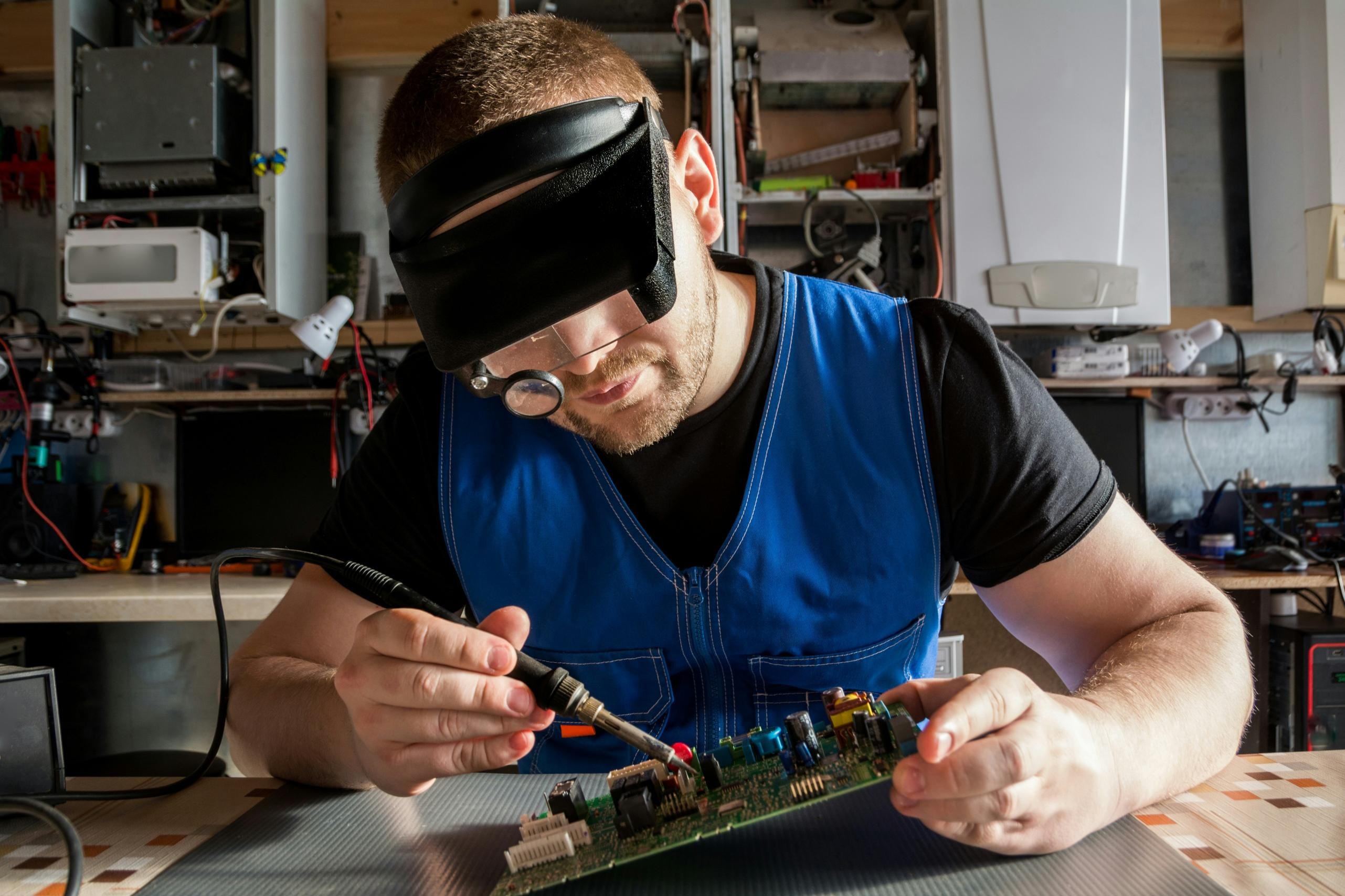
Power electronics engineers are helping to drive some of the most important technological developments of the modern economy. From an electric vehicle’s (EV's) and renewable energy systems to aerospace platforms, industrial automation and battery storage, power electronics enables the efficient conversion and control of electrical energy.
As electrification gathers pace, that expertise is becoming increasingly important across multiple industries. Employers are looking for engineers who can do more than make a circuit work on the bench. They need people who understand how a design will behave through development, validation and production and how it will meet compliance requirements.
In this article, we explore why demand for power electronics jobs is increasing, the skills employers are looking for and the career opportunities available within this specialist engineering field.
What is power electronics and why is it so important?
Power electronics is the branch of engineering focused on the conversion, control and management of electrical power. This may involve:
- AC to DC conversion
- DC to DC conversion
- DC to AC conversion
- AC to AC conversion
Power electronics systems are found in applications ranging from consumer products and industrial machinery to electric vehicles, renewable energy infrastructure and aerospace technologies.
Doing that effectively is rarely straightforward. A design needs to deliver the required efficiency, power density, voltage and current while managing losses, heat, electromagnetic interference (EMC) and protection. It may also have to remain stable under changing loads or operate reliably in a demanding or safety-critical environment.
That combination makes power electronics a highly specialist field. Experienced engineers may contribute throughout the development lifecycle, from topology selection and component choice to prototype development, testing, debugging and production support.
Read more: What is the difference between electrical and power electronics?
Why is demand for power electronics engineers increasing?
Electrification is creating more power electronics jobs
Transport is one of the clearest areas of growth. More than 20 million electric cars were sold worldwide in 2025, with power conversion systems playing a key role is systems such as:
- Traction inverters
- On-board chargers
- Battery management systems
- DC-DC converters
- Fast-charging infrastructure
The demand extends beyond passenger vehicles. Rail transportation, commercial vehicles, aerospace, marine systems and off-highway equipment are also adopting electrified systems. Each brings its own requirements, so engineers need to understand how established power electronics principles translate into different environments.
Charging infrastructure is another important part of that picture. Higher charging rates mean converting more power within demanding thermal and space constraints while maintaining reliability and compatibility with the wider grid. Engineers with specialist experience can therefore bring valuable knowledge to these projects.
Renewable energy and battery storage depend on power conversion
The growth of renewable energy is another major factor driving demand. Solar power systems, wind turbines and battery energy storage systems (BESS) and microgrids all rely heavily on power electronics to convert electricity and connect safely to the grid.
The UK’s Clean Power 2030 Action Plan sets out ambitions for 43–50 GW of offshore wind, 45–47 GW of solar and 23–27 GW of battery capacity. Delivering infrastructure at that scale brings engineering challenges that are increasing demand for power electronics expertise.
For professionals exploring power electronics jobs, that can mean opportunities in several different sectors. Experience gained in high-reliability or regulated environments can also transfer well into many of these roles.
Energy efficiency is becoming more important in power electronics design
Efficiency has always mattered in power electronics, but the pressure to achieve more from smaller and lighter systems is increasing.
Reducing losses can cut energy use and cooling requirements while increasing power density or reducing the overall size of a product. The engineering challenge is finding the right balance. A circuit that performs impressively under laboratory conditions still needs to cope with component tolerances and the loads it will experience in everyday operation.
Employers increasingly value engineers who can optimise complete systems rather than focusing solely on individual performance metrics.
SiC and GaN Technologies are raising the technical bar
Wide-bandgap semiconductors are creating new possibilities for power electronics engineers. Silicon carbide (SiC) and gallium nitride (GaN) devices can support systems that are more powerful and energy-efficient than conventional silicon-based alternatives.
Compared with conventional silicon devices, SiC and GaN technologies can offer:
- Higher efficiency
- Higher switching frequencies
- Reduced power losses
- Smaller system sizes
- Improved thermal performance
As more businesses invest in wide-bandgap semiconductor technology, engineers with practical SiC and GaN design experience are becoming increasingly sought after.
Which industries hiring power electronics engineers?
One of the advantages of building power electronics expertise is how widely it can be applied. Engineers may find opportunities in sectors ranging from renewable energy and scientific equipment to aerospace and defence.
There’s room to specialise too. Some engineers build their careers around a particular converter type or power range, while others develop deep knowledge of high-voltage design or motor control and apply it across several industries.
Our wider electronics jobs market also shows how closely these roles connect with embedded software, FPGA engineering, test and systems engineering. For employers developing complex products, that ability to work effectively across disciplines can be particularly useful.
What skills do employers look for in power electronics jobs?
The specific requirements vary between sectors, but employers typically seek engineers who can combine strong design knowledge with evidence that they’ve taken real hardware through development and test.
Key technical skills often include:
- Switched-mode power supplies (SMPS)
- DC-DC converter design
- AC-DC converter design
- Inverter design
- Motor control
- Electromagnetic compatibility (EMC)
- Thermal analysis
- Power semiconductor design
- MOSFETs
- IGBTs
- SiC devices
- GaN devices
- Control systems
Simulation expertise in tools such as MATLAB/Simulink, LTspice or PLECS can be valuable, but practical experience matters just as much. Employers want to know that an engineer can build and debug prototypes, investigate problems, support verification and help a design move towards manufacture.
Communication sits alongside that technical knowledge. Power electronics engineers work closely with mechanical, software, systems, manufacturing and test colleagues, so being able to explain design choices and work through problems with other disciplines is an important part of the job.
Why is experienced power electronics expertise difficult to find?
Power electronics is a discipline in which experience builds over time. Theory provides the foundations, but many of the most useful lessons come from real hardware. Noise, heat, instability and unexpected interactions between components are not always easy to predict from a simulation alone.
Employers can also be looking for a very specific combination of skills. A single vacancy might involve high-voltage design, digital control, EMC, functional safety and experience within a regulated industry. At senior level, the same engineer may also be expected to influence architecture, mentor colleagues and help take the product into manufacture.
That makes it important for employers to distinguish between the knowledge someone genuinely needs on day one and experience that could be developed in the role. Our engineering and technical recruitment specialists work within these markets and understand how to identify the skills that matter most for a particular vacancy.
What does rising demand mean for a power electronics career?
For engineers, growing demand means there are several directions a career can take. Power electronics jobs range from hands-on design and development positions through to technical leadership roles.
When applying, it helps to go beyond listing tools and technologies. Explain the power levels and topologies you’ve worked with and the problems you encountered during development or test.
An example of how you diagnosed an unstable converter or solved an EMC problem is likely to tell an employer far more about your capability than a long list of software packages. It also gives a recruiter a much clearer understanding of where your experience could fit.
Find your next power electronics job with Redline Group
Redline Group has been building world-class teams for technology companies since 1982. Our consultants understand the challenges of recruiting within highly technical disciplines, including power electronics engineering, analogue design, embedded systems and advanced electronics development.
Whether you're looking for a Power Electronics Engineer, Senior Power Electronics Engineer, Principal Engineer or technical leadership position, we can help connect you with opportunities that match your skills and career goals.
If you’re considering your next move, explore our latest analogue and power electronics jobs today, or register your CV to speak with one of our specialist consultants.
