
Circular Electronics: Growth Drivers, Skills & Jobs

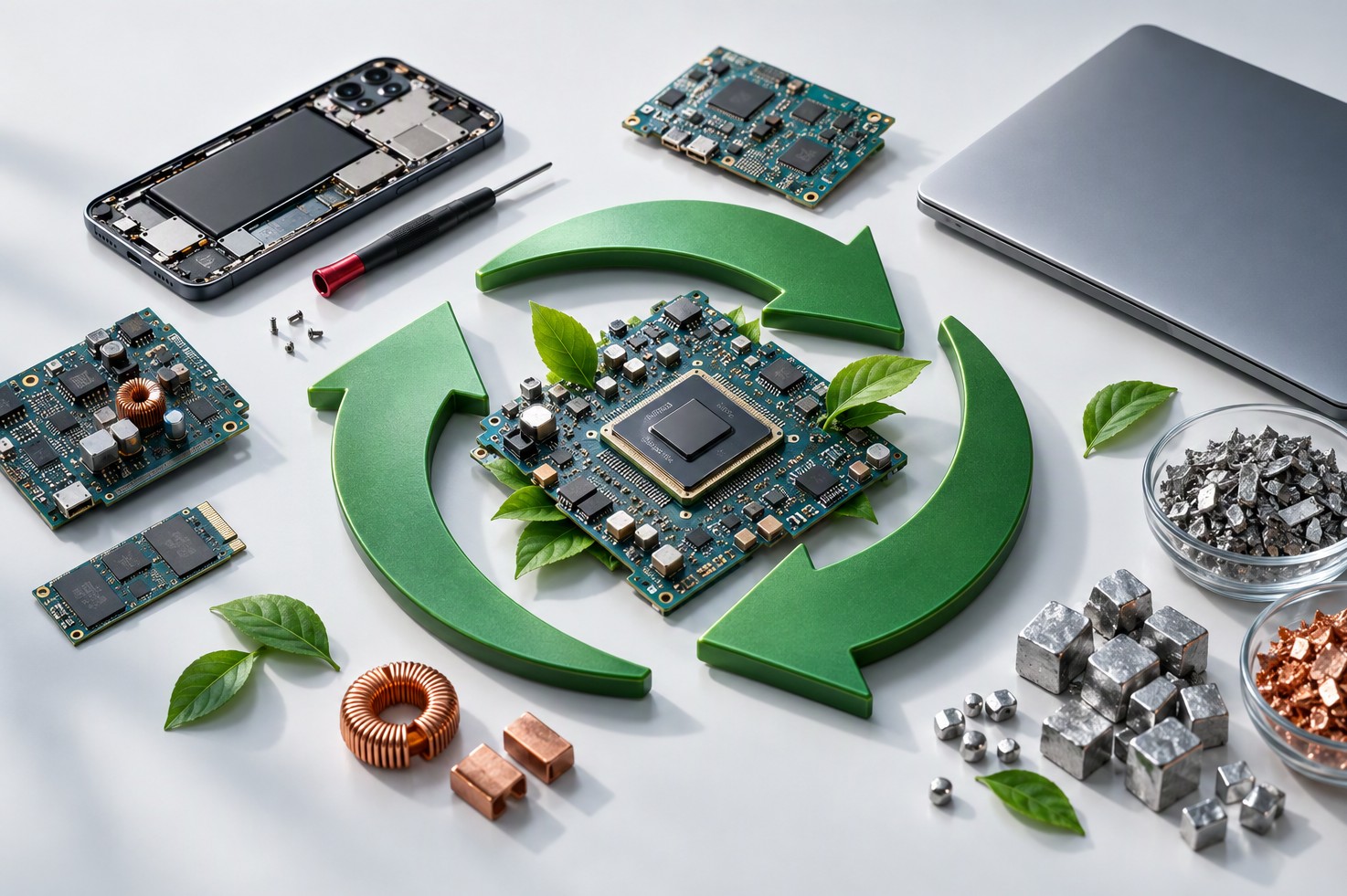
Circular electronics keeps electronic products, components and materials in use for longer through durable design, repair, refurbishment, reuse and materials recovery. Across electronics, it connects sustainability with practical decisions about product performance, equipment costs and long-term support.
A faulty connector should not have to mean the end of a useful piece of equipment. Circular Electronics Management (CEM) brings together electronics manufacturing, reverse logistics, repair, refurbishment, materials recovery and digital lifecycle management to help retain that value.
Stratistics MRC estimates the global circular electronics design market at US$18.4 billion in 2026 and forecasts US$72.6 billion by 2034, with a compound annual growth rate (CAGR) of 18.7%. This is a commercial forecast for circular electronics design, not a valuation of every repair, recycling or asset recovery activity.
The sector’s appeal is both practical and environmental: businesses want dependable equipment, better use of resources and viable ways to support products for longer. E-waste, repairability requirements, refurbishment economics and product design all help explain the interest.
This article explains what circular electronics involves, the factors shaping its development, and the implications for engineering and manufacturing employers and candidates.
What is circular electronics?
Circular electronics replaces the linear “make, use, dispose” approach with ways to extend product life and recover value. A simplified linear model is:
Extract → Manufacture → Use → Dispose
A circular approach builds in routes to continued use and recovery, rather than a single path to disposal:
Design → Use → Repair → Refurbish → Reuse → Recover Materials → Remanufacture
The industry encompasses:
- Product design for repairability and reuse
- Refurbishment and remanufacturing services
- Asset recovery and ITAD (IT Asset Disposition)
- Reverse logistics
- Component harvesting
- E-waste processing
- Digital lifecycle management software
- Battery recovery and recycling
- Product-as-a-Service business models
These routes are not a fixed sequence for every product. The most appropriate option depends on its condition, performance, support needs and whether further use is practical.
These activities serve different purposes. Repair restores function after a fault. Refurbishment prepares used equipment for further use, typically through inspection, cleaning, testing and any necessary repairs. Recycling recovers materials once products or components reach the end of their useful life.
For an electronics business, circularity starts well before a product is returned. Decisions about component selection, access for servicing, software support and documentation all influence whether keeping it working will be practical later.
How does growing e-waste drive circular electronics?
Growing volumes of e-waste strengthen the case for longer product lifecycles and better recovery systems. The Global E-waste Monitor 2024, published by the International Telecommunication Union (ITU) and the United Nations Institute for Training and Research (UNITAR), reported that the world generated 62 million tonnes of e-waste in 2022. Only 22.3% was documented as formally collected and recycled in an environmentally sound manner.
Those figures describe waste electrical and electronic equipment broadly, including appliances, rather than electronic components alone. They nevertheless show how much equipment is leaving use without entering documented formal recovery systems.
Discarded equipment can contain valuable materials. Examples of materials and the products or components in which they may be found include:
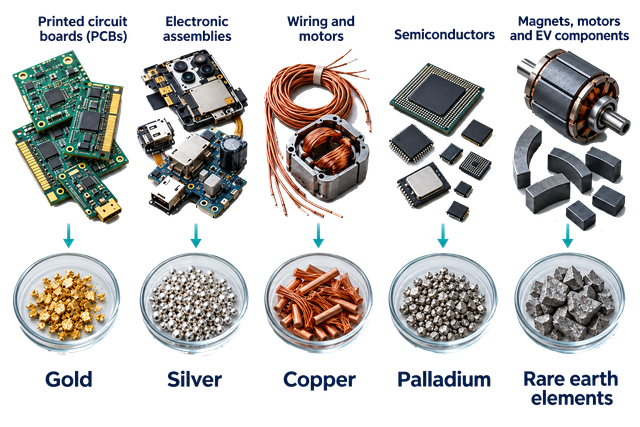
Circular electronics addresses the problem at several stages. More durable products can reduce premature failures while repair can return equipment to service. Each route depends on understanding the condition of the equipment and what is needed to make it useful again.
How are repairability requirements changing electronics design?
Product-specific regulation is turning repairability into a more concrete design consideration. From 20 June 2025, EU ecodesign requirements for smartphones and slate tablets have applied to covered products placed on the EU market. Separate energy labelling rules introduced a repairability score for covered smartphones and slate tablets.
What do the EU rules cover?
For covered products, requirements address:
- Repairability: disassembly and access to the information and software needed for repairs.
- Durability: resistance to damage and minimum battery performance.
- Software support: longer availability of operating system updates.
- Spare parts: availability and delivery requirements for key replacement parts.
These are product-specific EU requirements, not a blanket rule for every electronics product sold in the UK.
They are relevant to businesses supplying covered products into the EU, including UK-based manufacturers serving that market.
In the UK, the Waste Electrical and Electronic Equipment (WEEE) Regulations 2013, as amended, provide a domestic framework for managing end-of-life electrical and electronic equipment, encouraging the recovery, reuse and recycling of products and components.
Major manufacturers, including Apple Inc. and Samsung Electronics Co., Ltd., have publicly committed to circular design roadmaps. High unit volumes amplify the commercial and environmental impact of circular design adoption across this segment.
For engineering teams, the practical questions begin during development. Can a frequently replaced part be reached without damaging the enclosure? Are the necessary repair instructions available? Can the business support the product after its initial sale?
Answering those questions connects design decisions with purchasing and long-term product support.
When do electronics repair and reuse make commercial sense?
Repair and reuse can make commercial sense when equipment still meets operational needs and the cost of extending its life compares favourably with replacement. A product can retain value after its first owner no longer needs it, while replacing an entire system because one part has failed can create costs beyond the purchase price.
That gives businesses a reason to compare repair, refurbishment and replacement carefully. For example, restoring a serviceable piece of industrial test equipment could preserve an established setup, provided it still meets performance and safety requirements.
The decision needs evidence. Repair time, replacement parts, expected remaining life and ongoing support all affect whether extending use makes commercial sense. Energy consumption also matters when comparing older equipment with newer alternatives.
This is where skilled diagnosis becomes valuable. An engineer who can identify the cause of a fault and verify performance helps a business make a sound decision about the equipment’s future.
What role do asset recovery and ITAD play in circular electronics?
Asset recovery and IT Asset Disposition (ITAD) help businesses manage retired equipment, protect data and recover value where possible. Reverse logistics provides the route back from the customer so products can be assessed for reuse, refurbishment or recycling.
Design and recovery need to work together. Dell Technologies, for example, describes modular USB-C ports and customer-replaceable batteries in its January 2025 PC portfolio announcement. These changes illustrate how serviceable components can support longer product use.
Dell’s IT asset recovery services include resale of eligible equipment, recycling, logistics and data sanitisation. Recovering residual value gives businesses a commercial reason to manage retired technology rather than leave it unused.
For equipment holding customer or company information, secure data handling is an essential part of preparing it for another user. Clear records and traceability also help organisations understand where assets have gone.
ITAD and lifecycle service providers include Reconext, Ivy Technology, Sims Lifecycle Services, SK TES, Ingram Micro Lifecycle and Foxway. Their role connects equipment retirement with opportunities for further use and value recovery.
How does product design support repair and refurbishment?
Repair and refurbishment are easier to deliver when they have been considered from the outset. Accessible assemblies and useful diagnostic information can reduce the work needed to identify and resolve a fault.
Consider a product with a power supply that can be replaced independently. If that module fails, a service team may be able to restore the unit without replacing other functioning assemblies. The design still needs to meet its electrical and mechanical requirements, but serviceability becomes part of the engineering brief.
Feedback from returned products can also inform future designs. Repeated connector damage or overheating may point to an improvement that reduces failures across the next production run.
HP Inc. also describes repair, refurbishment and reuse as principles of its circular economy approach, alongside circular product design and the use of recycled and renewable materials. The engineering challenge is to translate those principles into products that can be maintained and supported in practice.
What affects the economics of electronics refurbishment?
Refurbishment can extend a laptop’s useful life and avoid some demand for new manufacturing. However, carbon savings, resale discounts and operator margins are not fixed: they depend on the device, its condition and the assumptions used in the comparison. Key considerations include:
- Environmental impact: the parts, transport and processing needed for refurbishment, alongside the remaining useful life and any avoided new production.
- Buyer value: purchase price, warranty, performance, energy consumption and ongoing support compared with a suitable replacement.
- Commercial viability: acquisition costs, testing, repairs, logistics and the achievable resale price.
Similar assessments are relevant to other equipment categories, although the economics and potential savings differ:
- Smartphones
- Networking equipment
- Industrial electronics
- Servers
- Data centre hardware
Which engineering skills and jobs support circular electronics?
Circular electronics draws on established roles in electronics design, test and repair, quality engineering, manufacturing engineering and technical sales. These skills turn longer product life from a design ambition into a dependable process:
- Electronics design: considering durability, service access and component availability.
- Test and repair: diagnosing faults and verifying performance after intervention.
- Quality engineering: defining acceptance criteria and maintaining traceable records.
- Manufacturing engineering: developing repeatable inspection, rework and refurbishment processes.
- Technical sales: explaining service options, product condition and lifecycle value.
Relevant electronics jobs do not always include “circular” or “sustainability” in the title. Candidates can demonstrate their experience through examples of reducing failures, improving repair turnaround or extending product support. Employers can make their requirements clearer by identifying the specific design, test, quality or manufacturing capabilities their circular electronics plans need.
Electronics recruitment and careers with Redline Group
Circular electronics brings together commercial judgement and engineering expertise. Its practical value depends on people who understand both the product and the processes needed to keep it useful.
At Redline Group, we help technology companies build high-performing teams while changing lives through meaningful career opportunities. Since 1982, we have specialised in electronics recruitment, supporting businesses across engineering, sales, design, development, test, manufacturing and technical support. Hiring? Speak to our specialist consultants about securing the technical talent your business needs. Considering your next move? Explore our latest electronics jobs and discover opportunities aligned to your skills and ambitions.
